


Made in Germany · ISO 27001 · GDPR-compliant
Quality Criteria for Learning Management Systems
The 5 Most Important Quality Criteria for Choosing an LMS
When selecting an LMS, you need more than just product promises—you need objective criteria. This technical article outlines five key quality dimensions: compliance, flexibility, reliability, future-proofing, and user-friendliness.
For each quality criterion, the following is explained: what matters, specific evaluation questions, and how SoftDeCC implements them in practice. At the end: a comprehensive checklist and a clarification of the often-misunderstood term “validated LMS.”
Scalability
Cost-effectiveness
Future-proofing

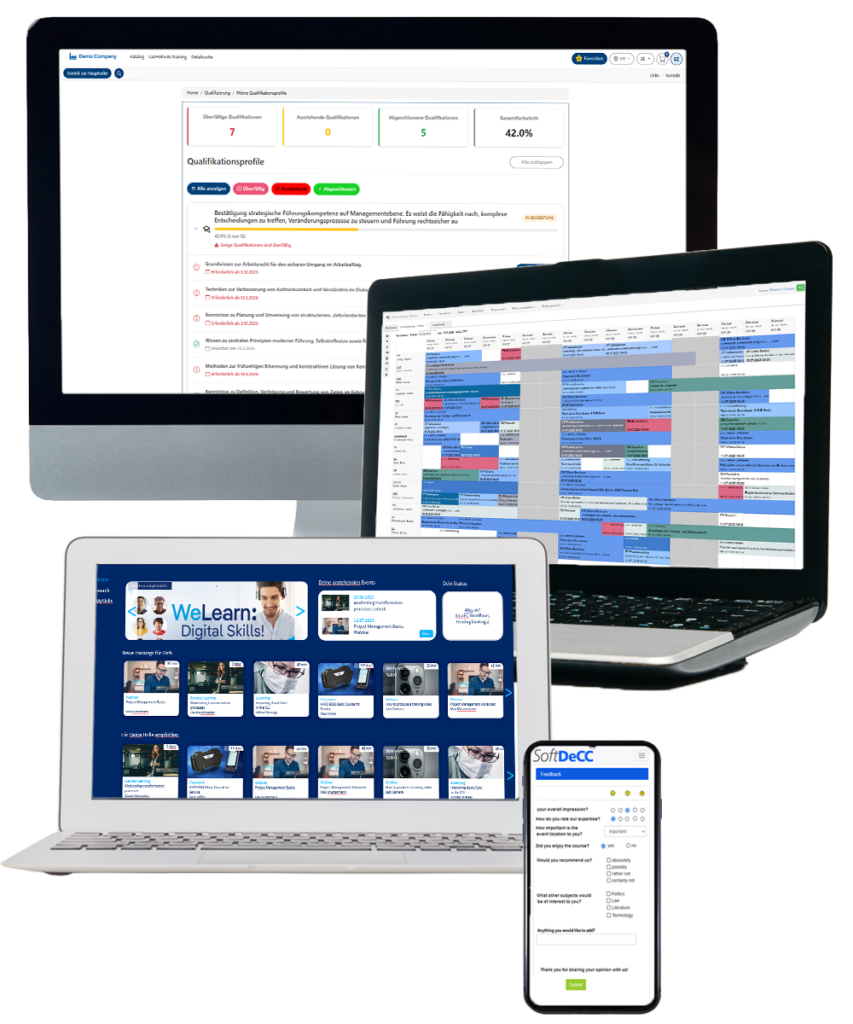
What Really Matters When Choosing an LMS
The 5 Most Important Quality Criteria for Selecting an LMS
Compliance: Ensuring Interoperability and Standards
✓
Interoperability: Support for SCORM 1.2, SCORM 2004, and xAPI, so that learning content from various authoring systems can be used without the need for customization.
✓
Accessibility: WCAG-compliant learning platforms are increasingly required in regulated industries and by public sector clients.
✓
Data Protection and Data Security: GDPR-compliant encryption, role-based access controls, and retention periods are fundamental technical requirements.
Here's how SoftDeCC implements this: SCORM 1.2, SCORM 2004, and xAPI are supported natively. Learning interfaces are designed for accessible integration. GDPR-related configurations are included in the standard setup.
Flexibility: Adaptability without project cost risk
✓
Adaptability: Learning portals, communication templates, and learning paths should be configurable without requiring any development effort
✓
Scalability: From 200 to 20,000 users—without increased load times or the need to redesign data structures.
✓
Level of integration: Integration via API, LDAP, and SSO with HR systems, ERP platforms, and compliance databases.
Here’s how SoftDeCC implements this: Country-specific learning portals, language-specific templates, and brand-compliant branding—all configurable without modifying the source code. An open REST API and preconfigured connectors for common HR and ERP systems
Reliability: Operational Readiness as a Prerequisite for Compliance
✓
Availability: SLA targets of at least 99.5% are contractually guaranteed, with defined response and resolution times.
✓
Performance: Consistent even under heavy load, such as during simultaneous audits or compliance training sessions at multiple locations.
✓
Support and Maintenance: a dedicated point of contact, fixed release cycles, and a documented escalation process.
Here's how SoftDeCC implements this: operations with defined SLAs, redundant infrastructure to handle peak loads, and dedicated support with fixed response times.
Future-Proofing: Protecting Your Investment Through Provider Development
✓
Technological Advancements: AI-powered learning recommendations, automated learning paths, and robotics integration should be able to be incorporated without having to rebuild the entire system.
✓
Long-term vendor partnership: A proven track record of development is more relevant than promises in a roadmap.
Here's how SoftDeCC does it: AI-powered features based on an open modular architecture, continuous development since 1998, and the involvement of existing customers in product roadmap decisions.
User-Friendliness: Acceptance as a Key to Success
✓
Intuitive interface: The benchmark isn't the range of features, but how quickly an employee with no prior knowledge can start a course.
✓
Mobile Accessibility: A True Mobile App or Just Responsive Web Design?
✓
Personalization: customizable learning paths, progress indicators, learning recommendations.
Here's how SoftDeCC implements this: Designed for training center workflows (booking, certification, exam administration). Fully mobile-friendly as a native web client. Automated, qualification-based learning path assignment.
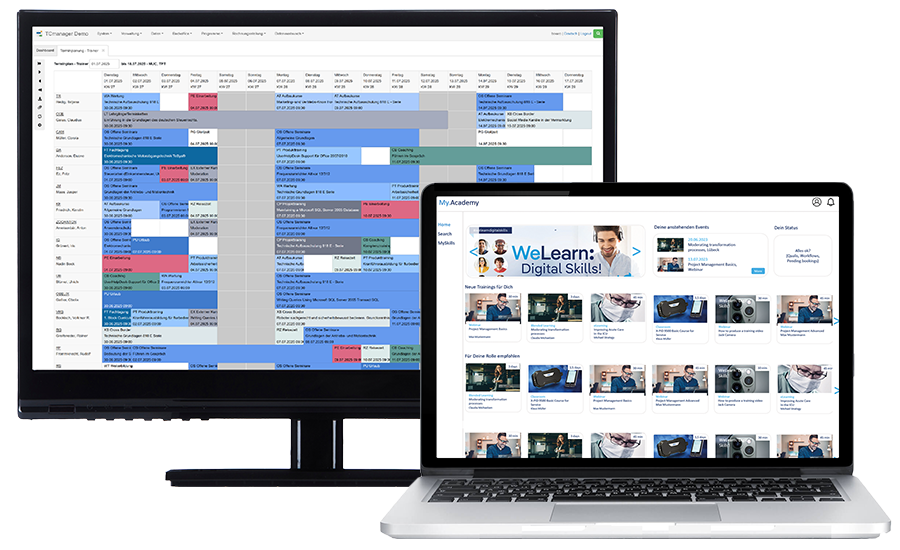
Sounds good, but ...
Validated LMS: Marketing Term or Quality Feature?
The term “validated LMS” sounds like a reliable indicator of quality. But upon closer inspection, it isn’t.
Validation does not evaluate the software itself, but rather the specific implementation process—that is, whether your company uses the LMS in a manner that provides verifiable evidence of compliance for regulated activities. The result depends on your internal processes, not on the product itself. “Validated LMS” is therefore ultimately a term used primarily for marketing purposes.
What Really Matters: ISO Certifications and References. ISO 27001 and ISO 9001 are internationally recognized certifications that demonstrate a provider’s systematic approach to information security and quality management. Direct conversations with reference customers from comparable industries provide more reliable insights than any marketing certificate.

Checklist
Systematically Assessing LMS Quality
☐
Compliance: Does it natively support SCORM 1.2, SCORM 2004, and xAPI? Does the standard include WCAG-compliant accessibility features? Does the provider offer GDPR-compliant terms of service and configurable privacy settings?
☐
Flexibility: Can learning portals, learning paths, and templates be configured without any development effort? Are there any reference projects with a comparable number of users? What API standards and connectors are available?
☐
Future-Proofing: Which AI and automation features are already included in the product or on the roadmap? How are customers involved in product development?
☐
Reliability: Are SLA metrics and response times specified in the contract? Has load behavior been verified in parallel testing scenarios? Is there a dedicated point of contact and a defined escalation process?
☐
User-friendliness: Can new users get started without training? Is it a true mobile app or just a responsive design? Is there automated, skill-based learning path assignment?
Get More Information for Free Now
Want to learn more about SoftDeCC LMS now?
In just 30 minutes, learn how SoftDeCC LMS and TCmanager® can help you take your training center or corporate learning program to the next level.
✓
Over 25 Years of Expertise
✓
Made in Germany
Frequently Asked Questions