

Made in Germany · ISO 27001 · GDPR-compliant
Free Seminar Management
Opportunities, Challenges, and Practical Tips on Freeware and Open Source—for Training Centers, Educational Institutions, and L&D Professionals
More and more organizations are looking for free seminar management software to set up digital workflows efficiently and without license fees. Freeware and open-source seminar management solutions are seen as an attractive starting point—but if you take a closer look, you’ll see that most free tools are limited to basic functions.
Professional seminar providers with compliance requirements, payment processing needs, and interface requirements quickly reach their limits.
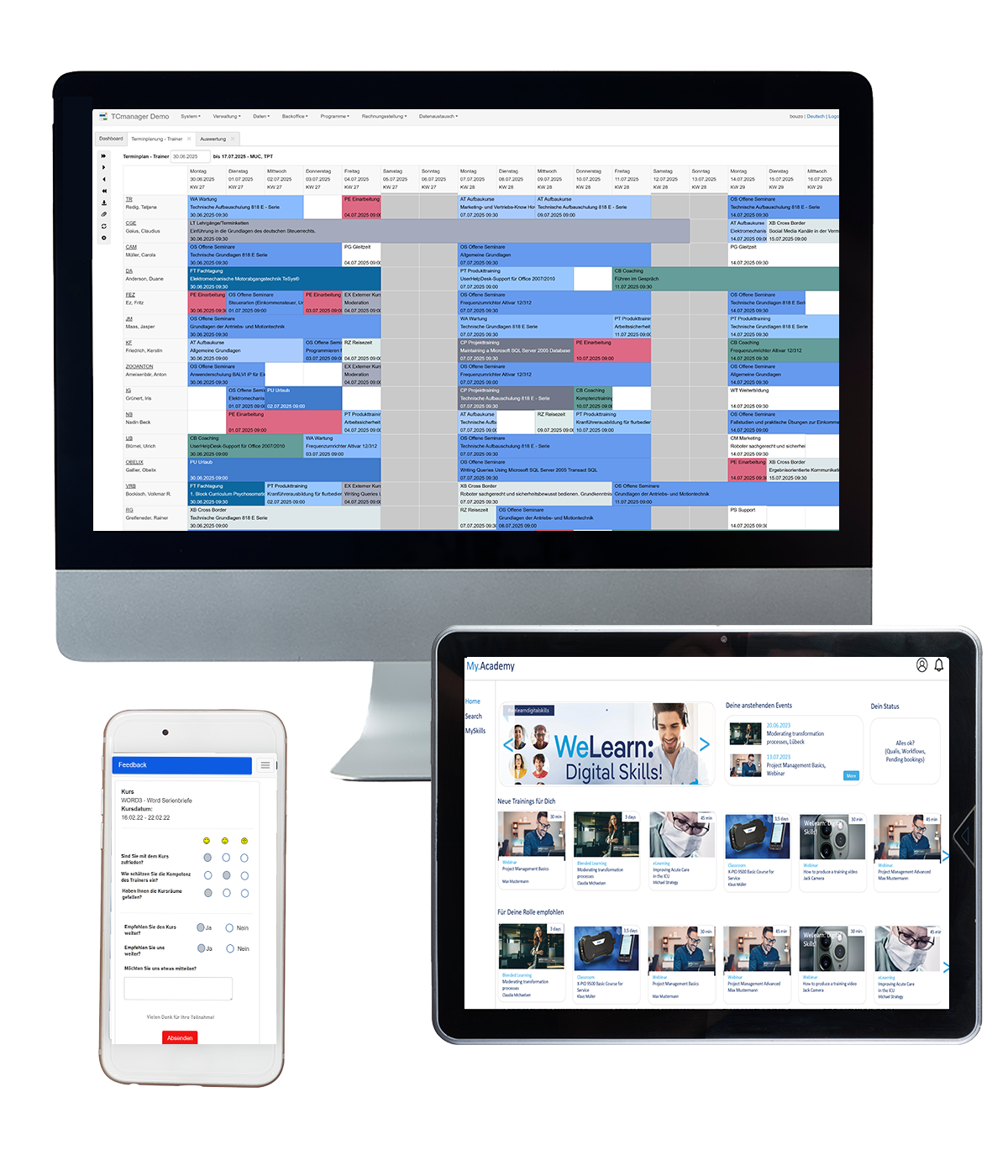
System Integration
Resource Planning
Automation

Requirements for Seminar Management Software
What Professional Seminar Providers Really Need
Before deciding on a free solution, it’s worth taking a look at your actual requirements. Educational institutions and training centers typically need far more than just a simple course list:
✓
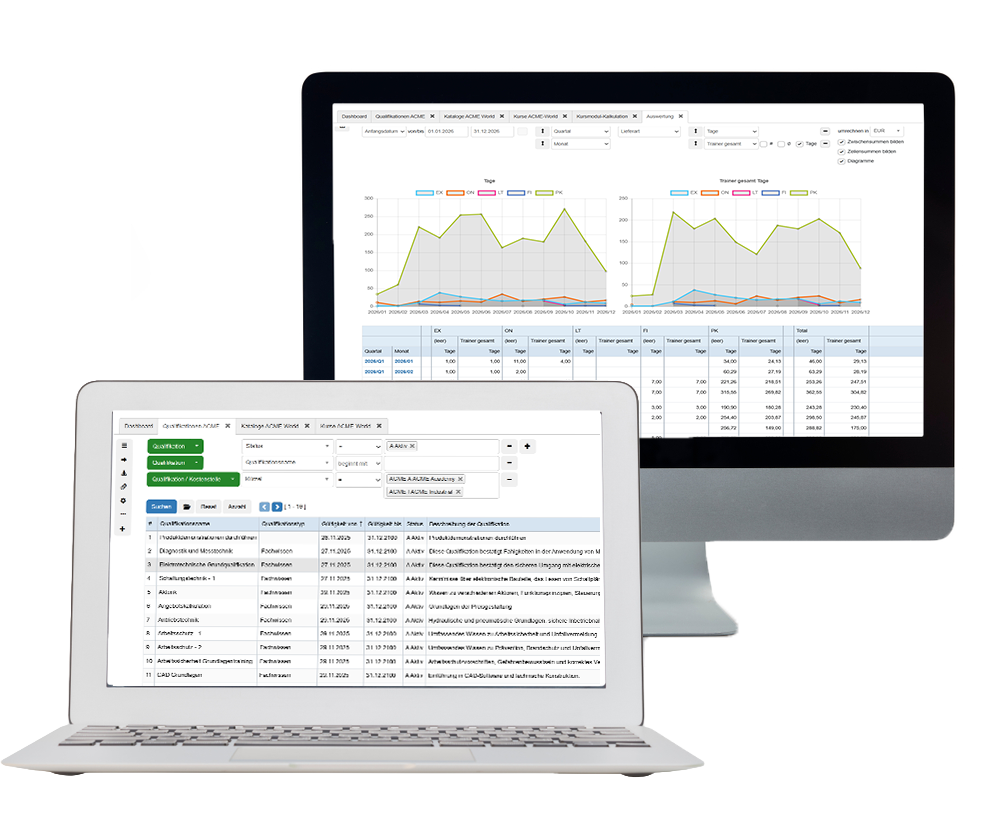
Comprehensive participant management: participant data, groups, attendance records, and complete training history.
✓
Payment and Invoicing Processing: Online payments, invoicing, collections, financial reporting.
✓
Automated processes: reminders, waitlist management, certificate delivery, email notifications.
✓
Reports & Analytics: Reports on courses, participants, revenue, and certificates of completion.
✓
Integration & Interfaces: CRM, Accounting, HR Systems, Calendars, Marketing Tools, APIs.
✓
Security & Compliance: GDPR-compliant data storage on EU servers, role and permission management, audit logs, and backups.
Free tools typically cover only the first one or two of these points—enough for getting started, but not for scalable training management.
Who Benefits from Free Seminar Management
Benefits of Free Seminar Management
Free seminar software makes it easy for small clubs, individual instructors, or organizations that hold only a few events per year to organize their seminars. Scheduling events, maintaining simple participant lists, and providing introductory course materials digitally—these tasks can often be handled easily with free tools.
This is often sufficient during test phases or for very small groups. Anyone who wants to familiarize themselves with digital processes without making an immediate investment can gain some initial experience here. However, for anything beyond that, you’re bound to run into limitations.

Problems and Pitfalls
Restrictions and Hidden Costs
The term “free seminar management software” is often misleading in practice. Most providers use freemium models or time-limited trial versions. Essential features—payment processing, detailed reports, automations, and integrations—are only available in paid packages.
Added to this are indirect costs that are regularly underestimated: data migration, employee training, and onboarding expenses. Data protection risks arise when providers do not offer legally compliant data processing agreements (DPAs) or store data outside the EU. Bottom line: Using a supposedly free solution can cost several thousand euros in the first year—despite the zero-euro license.
Definition
Freeware vs. Open Source – The Key Difference
Freeware
Proprietary software with no licensing costs, but also no access to the source code. Ready to use right away, with no prior technical knowledge required—but clearly limited in its capabilities. Often a stripped-down version of a commercial application.
Open Source
The source code is open, offering maximum customization and transparency. Those with their own IT resources can tailor the solution to their specific needs. The price of this freedom: Installation, maintenance, updates, security, and data protection are entirely your own responsibility.
For organizations without a dedicated IT team, open-source seminar software is rarely the more efficient option—even if the license fee is zero.
Investment in Professional Software
When is it worth switching to a professional solution?
For small clubs, individual coaches, or organizations just starting out with very basic needs, free seminar software is often sufficient as a first step. That changes as soon as:
✓
GDPR-compliant data management and the AVV are mandatory,
✓
Payment processing and invoicing must be integrated,
✓
whether compliance documentation, skill tracking, or qualification management is required,
✓
Interfaces with CRM, HR, or ERP systems are required,
✓
The number of seminars, participants, or locations is growing.
Anyone who wants to not only manage seminars but also market, bill, and operate them professionally as part of a comprehensive learning infrastructure should plan the transition well in advance. Migrating in a timely manner saves resources in the long run.

Conclusion
A good start, but not a long-term solution
Freeware and open-source seminar software are suitable for clubs, trainers, and small organizations that want to test digital workflows or manage small groups. For anything beyond that—compliance, scalability, data protection, integration—free solutions reach their structural limits.
Anyone who wants to manage seminars as part of a professional learning infrastructure needs a solution that can scale with their needs. SoftDeCC Seminar Management is specifically designed for training centers, educational institutions, and companies—with full GDPR compliance, hosting in Germany, and over 25 years of practical experience in industrial training environments.
Learn more now
Ready for professional seminar management?
Get a free, no-obligation consultation. In just 30 minutes, you'll learn what SoftDeCC learning technology can do for you.
✓
Over 25 Years of Expertise
✓
Made in Germany
Frequently Asked Questions