

Made in Germany · ISO 27001 · GDPR-compliant
Social Media Learning in L&D and Corporate Learning
The Digital Learning Revolution – What Is Social Media Learning?
Learning has long since moved beyond the classroom or the LMS. Employees use LinkedIn, YouTube, and digital communities to acquire knowledge, exchange ideas, and solve specific problems. This informal learning is becoming increasingly important, especially in hybrid work models.
This raises the question for L&D of how these learning habits can be meaningfully integrated into the corporate learning strategy. An LMS can serve as the connecting infrastructure: It links formal learning opportunities with relevant knowledge sources, structures learning activities, and provides a clear picture of competency development.
Informal Learning
Learning Activities
Peer Learning


Definition
Social media learning refers to the use of social media and digital networks to share, acquire, and deepen knowledge—whether through LinkedIn, YouTube, or internal company networks. Unlike formal learning methods, it is not a learning platform that determines the learning path, but the social network itself.
Relevance in the Context of Working from Home and Hybrid Work Models
Its importance has grown, especially in decentralized work environments. Employees exchange ideas with colleagues and expert groups without being physically present in the same location.
LMS and the Integration of Social Media
An LMS makes it possible to facilitate informal knowledge sharing and ensure that learning content aligns with corporate goals—in a way that is documentable, evaluable, and results in measurable progress in competencies.
Forms and Manifestations
What Is Social Media Learning? – A Critical Examination
Informal Learning Through Platforms:
LinkedIn and YouTube offer user-generated content, quick access, and open discussion
Collaborative Learning in Groups
Online communities or internal Slack channels for knowledge sharing.
User-Generated Content
"Democratization of knowledge"—enables the rapid dissemination of practical knowledge, but carries the risk of varying content quality.
Pros and Cons
The Pros and Cons of Social Media Learning
Disadvantages and Challenges
❌
Fragmentation and information overload: Learners have to painstakingly sift through the material to find what's relevant.
❌
Data Protection and Compliance: Many social media platforms do not comply with the strict data protection regulations of regulated industries. GDPR compliance is virtually impossible to ensure on external platforms.
❌
Lack of a structured learning framework and verifiability: Progress in competencies is difficult to certify—a critical drawback for skills management.
Advantages:
✓
Flexibility and accessibility: available anytime, anywhere.
✓
Promoting peer-to-peer learning: in-depth exchange, practical knowledge.
✓
Real-time feedback and interactivity: immediate feedback that formal courses rarely provide.
✓
Up-to-date, practical exchange: User-generated content is created in real time.
Tip: Instead of resorting to external platforms that are difficult to monitor for compliance with data protection laws, the SoftDeCC Media Library offers the same free access to educational media—centrally hosted and GDPR-compliant.
Strategic Approach
How Social Media Learning Can Support Long-Term Learning Success
Learning on social media is based on Albert Bandura’s theory of social learning, which posits that people learn through interaction with and observation of others. The 70-20-10 learning model places social media learning in the 20 percent category of informal learning: It complements formal training programs (10%) and experiential learning (70%).
Sustainable learning must be aligned with the company’s specific goals. Social media learning can address individual learning needs, but it must be supplemented by structured learning programs. Combining social media learning with a blended learning approach results in a robust learning architecture.
Learn more about blended learning →
The Role of the LMS:
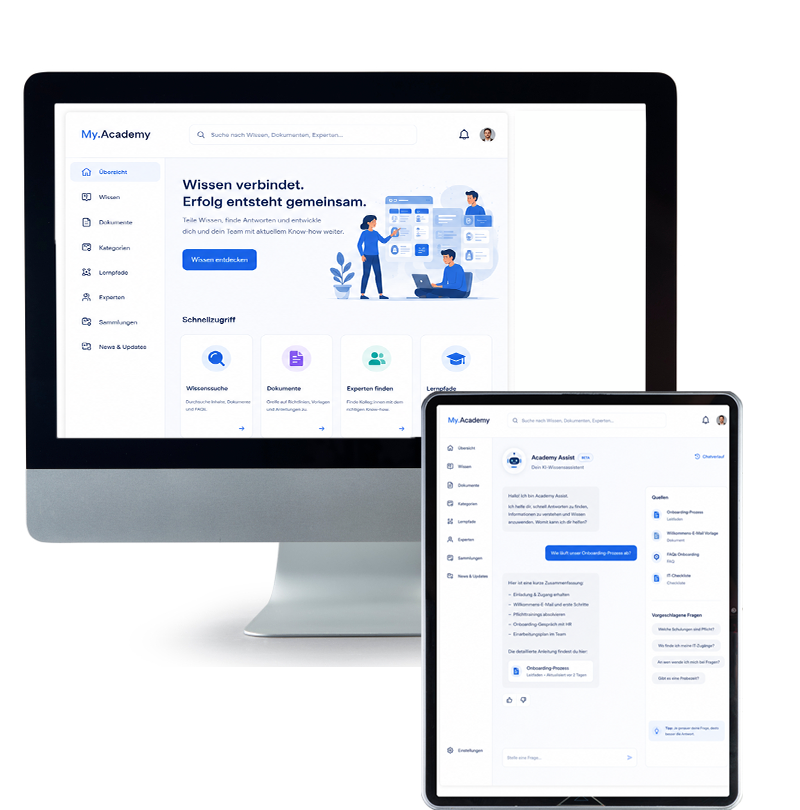
LMSs specifically address these shortcomings: They make it possible to define learning paths, curate content, and monitor the quality of learning materials. Progress in competency development can be documented—and thus utilized in qualification management.
✓
Curated Learning: LMS platforms filter content from social networks and provide relevant learning materials—tailored to the user’s role, skill profile, and learning objective.
✓
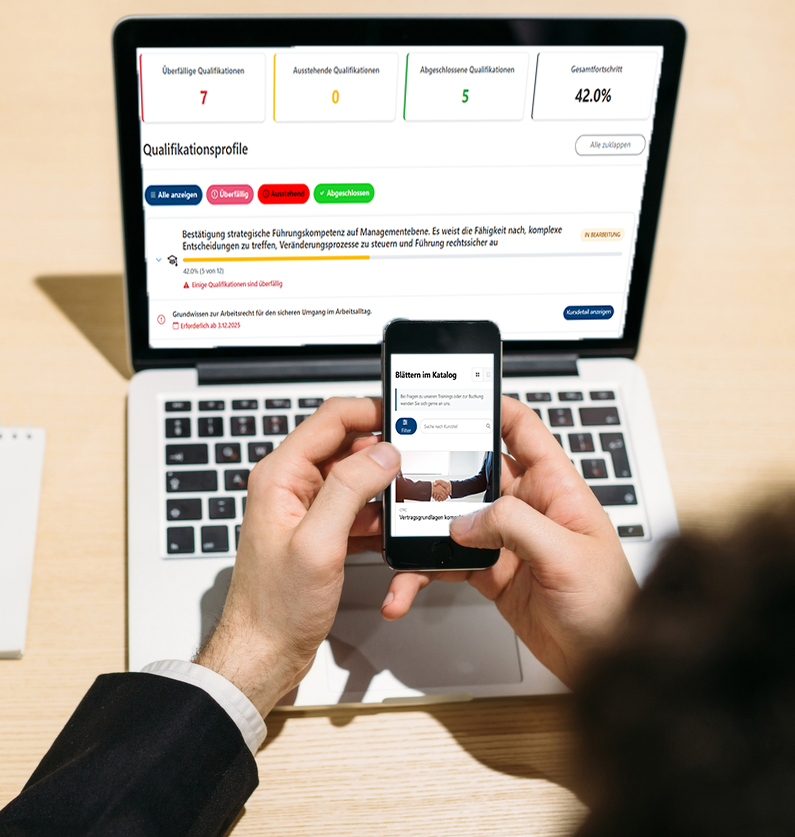
Learning Progress Monitoring and Skill Tracking: With SoftDeCC, companies ensure that employees achieve their learning goals and meet the requirements of competency management.
Support or Replacement
Social Media Learning & Skills Management
Can social media-based learning replace traditional skills management?
No. Social media learning is informal and unstructured—which contradicts the goals of competency management, which is based on measurable, documented progress. The lack of certifiability poses a compliance risk for companies in regulated industries.
Can social media learning support skills management? Yes, to add to that: Employees discuss current trends, which are then incorporated into formal learning paths. SoftDeCC combines informal social media learning with formal learning methods through tools for tracking, skill assignment, and certification.

Outlook
Social Media Learning and the Future of Learning Technology
The integration of AI, learning analytics, and adaptive learning algorithms makes it possible to guide learning processes in a targeted manner. Modern LMSs increasingly offer social media features—internal forums, recommendation algorithms, peer feedback—to integrate informal exchanges in a structured way.
The key lies in combining informal and formal learning methods without losing control over competency goals and proof of compliance.
Checklist: Questions for Decision-Making
Guidance for Implementing Social Media Learning
☐
Strategic Alignment: Does social media learning align with the overarching goals? Can it be used to develop business-relevant skills?
☐
Learning Objectives and Content: What learning objectives should be supported? Is there a clear idea of the content to be shared? Is the content of sufficient quality and up-to-date?
☐
Integration with existing learning systems: Do you have an LMS that can integrate social media learning? Can it be integrated into formal learning paths? Can learning progress and certificates be tracked?
☐
User-friendliness and accessibility: Are platforms easily accessible to everyone? Do users have the necessary digital skills? Is access GDPR-compliant?
☐
Corporate Learning Culture: Does the culture support informal learning? Are there motivational incentives?
☐
Privacy and Security: Are Platforms GDPR-Compliant? Protection Against Unintentional Sharing of Sensitive Data?
☐
Evaluation and Performance Monitoring: How are successes measured? Are there key performance indicators for competency development?
☐
Resources and Support: Are there enough time, budget, and training? Are there internal or external experts to provide guidance?
Get More Information for Free Now
Should You Integrate Social Media Learning Now?
Are you interested in integrating social media learning into your learning environment? We'd be happy to advise you.
✓
Over 25 Years of Expertise
✓
Made in Germany
Frequently Asked Questions