

Made in Germany · ISO 27001 · GDPR-compliant
CLaaS - Corporate Learning as a Service
Business Model: Marketing Training Resources as a Service
Corporate Learning as a Service (CLaaS) enables companies to monetize their established training expertise—as a scalable service for external customers. The key to success: a multi-tenant LMS that combines white-label branding, automated certificate management, and CRM integration in a single platform.
Business Model
Outsourcing
Learning Infrastructure


Definition: Corporate Learning as a Service
Business Model at a Glance
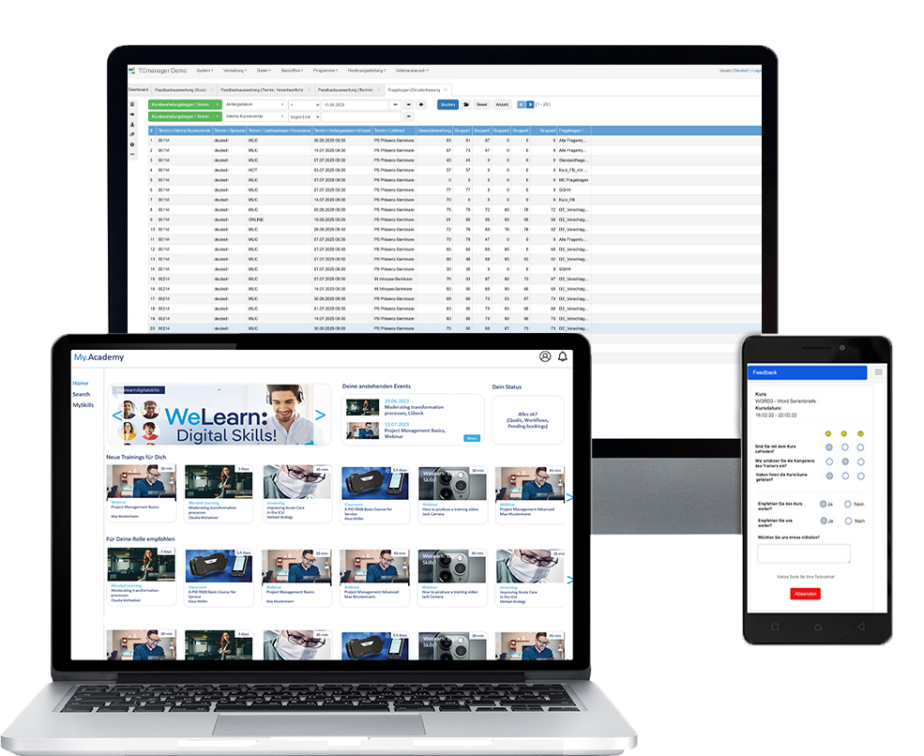
CLaaS is not a theoretical concept. Companies that have already established training infrastructure and specialized content resell this expertise as a service—to partner companies, suppliers, or end customers. The LMS handles the infrastructure: user management, billing logic, course delivery, and compliance reporting are managed centrally, with client isolation and scalability.
Variations of the Business Model
Core Offerings and Pricing Models
Three types of training offerings have become established: modular training programs (industry-specific learning modules), blended learning (e-learning + in-person sessions, managed through a course management system), and automated certifications (qualification status, expiration dates, recertification cycles).
In terms of pricing, three models dominate: subscriptions for permanent course access, pay-per-use for on-demand use, and white-label licenses for companies that operate the platform under their own name.
CLaaS is the more precise category for training centers, academies, and companies with structured continuing education programs.
Benefits
Benefits for Training Providers and Clients
For Training Providers
✓
Monetization: Existing course materials, instructor expertise, and infrastructure are converted into revenue without requiring additional infrastructure investments.
✓
Scalability: A multi-tenant platform serves hundreds of client organizations simultaneously without proportionally increasing operational overhead.
✓
Flexibility in course offerings: Course packages can be tailored to specific industries—from mandatory compliance training to optional skill-building programs.
For Customers
✓
Instant access: No need to implement your own LMS—use the provider’s learning infrastructure, customized to your own branding.
✓
Cost Control: Pay-per-use or subscription instead of capital expenditures for system setup.
✓
Quality Assurance: The provider’s ongoing maintenance of training content ensures that it remains up to date—which is particularly important given frequent changes to standards.
Perspectives
Market Analysis and Target Audiences
The global e-learning market has been growing significantly for years: According to Global Market Insights, the market was valued at approximately $399 billion in 2022, with an expected annual growth rate of about 14% through 2032—driven by the push toward digitalization, a shortage of skilled workers, and increasing compliance requirements.
Three target groups benefit particularly strongly from CLaaS:
Regulated Industries
The pharmaceutical, financial, and healthcare industries require comprehensive proof of compliance. Banks provide ongoing training on topics such as anti-money laundering and data protection.
Technology Sectors
Companies such as Microsoft use CLaaS-like models (e.g., the Enterprise Skills Initiative) to build product expertise among customers and partners.
Manufacturing and Industry
Automotive suppliers are training external partners and dealers on CLaaS structures—particularly in the areas of electric mobility and new manufacturing technologies.
Learning Infrastructure and Learning Management
LMS Requirements for CLaaS
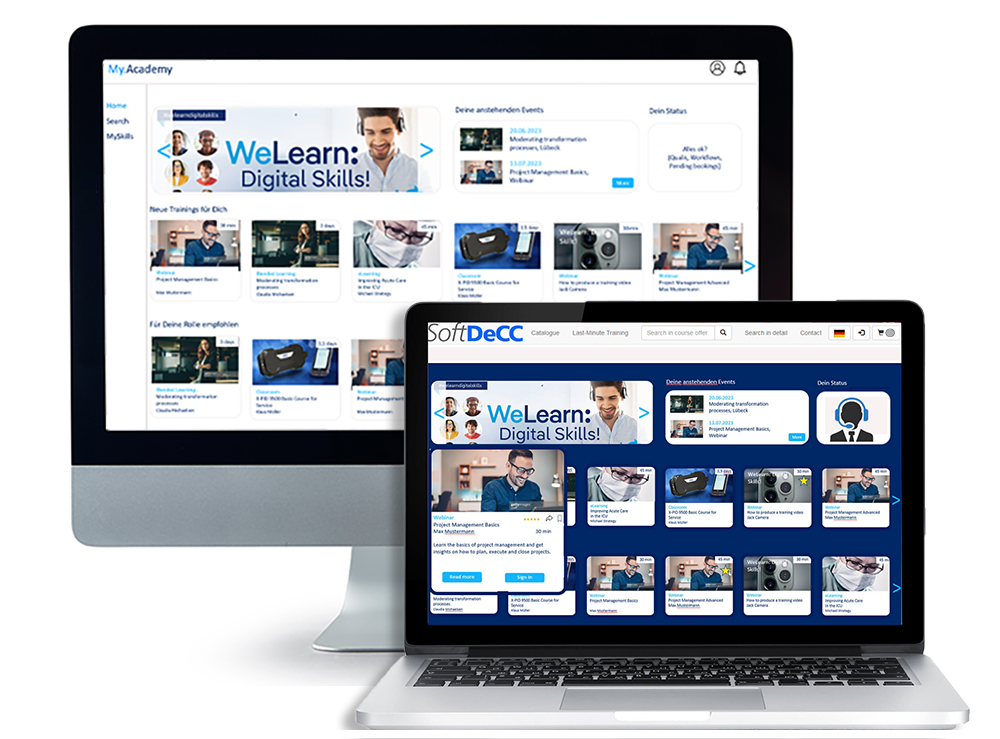
The LMS is the operational heart of every CLaaS model. Four requirements are non-negotiable:
✓
White-Label and CI Customization: Customers expect the learning portal to operate under their branding—logos, color schemes, domains, and communication templates can be configured on a per-client basis without requiring any software changes to the core system.
✓
System Integration (CRM, Finance, HR): Course billing through the Finance system, customer management through CRM, and qualification data fed back into HRM.
✓
Learning Paths and Personalized Learning: Role-based learning paths tailored to job profiles; adaptive learning with real-time adjustments based on test results.
✓
Qualification Management and Compliance Reporting: Automated certificate tracking, compliance reports for financial, pharmaceutical, and manufacturing audits, and competency gap analysis.
✓
Blended Learning and Multimodal Learning: Seamlessly integrating online modules and in-person sessions into a single learning environment.
✓
Reporting and Learning Analytics: Course completion rates by client, compliance status per learner, course performance over time—exportable to BI tools and CRM systems.
Highlights
Automation and Personalization of Learning Content
A CLaaS operation that relies on manual administration cannot be scaled profitably. Automation is therefore essential for economic viability.
Automated Administrative Processes
Enrollments, reminders, certificate issuance, expiration alerts, and reporting—all without manual intervention.
Personalized Learning Paths
Based on skill profiles, the LMS automatically assigns appropriate courses.
Learning Analysis and Optimization
Course completion rates and engagement times show which content is effective.
Practical Implementation
Putting the CLaaS Concept into Practice
Self-Service for Customers
Client organizations create their own users, assign learning paths, and generate reports—without any intervention from the provider.
Automated Onboarding
Standardized workflows integrate new client organizations in hours rather than weeks—create a client, configure branding, assign a course catalog, and start importing users.
Billing Integration
Integration with the finance system automates accounting.
Good to Know
Challenges and Risks
• Technological complexity: Multi-tenant operations, white-label configuration, and system integration are more challenging than a single-tenant learning platform. On-premises solutions offer more control, while the cloud scales more easily.
• Data Protection and GDPR Compliance: Every customer organization has its own data protection requirements—client-isolated data storage, role-based access control, and audit-proof logging are mandatory.
• Content Quality Assurance: Training content under a third-party brand must be up-to-date, factually accurate, and legally compliant. A defined review process is essential.
Get More Information for Free Now
Ready to test CLAAS as a new business model?
In just 30 minutes, learn how SoftDeCC can support Corporate Learning as a Service—with efficient skills management, flexible billing models, and infrastructure.
✓
Over 25 Years of Expertise
✓
Made in Germany
Frequently Asked Questions