


Made in Germany · ISO 27001 · GDPR-compliant
Shaping the Digital Learning Environment
A Learning Environment in Motion
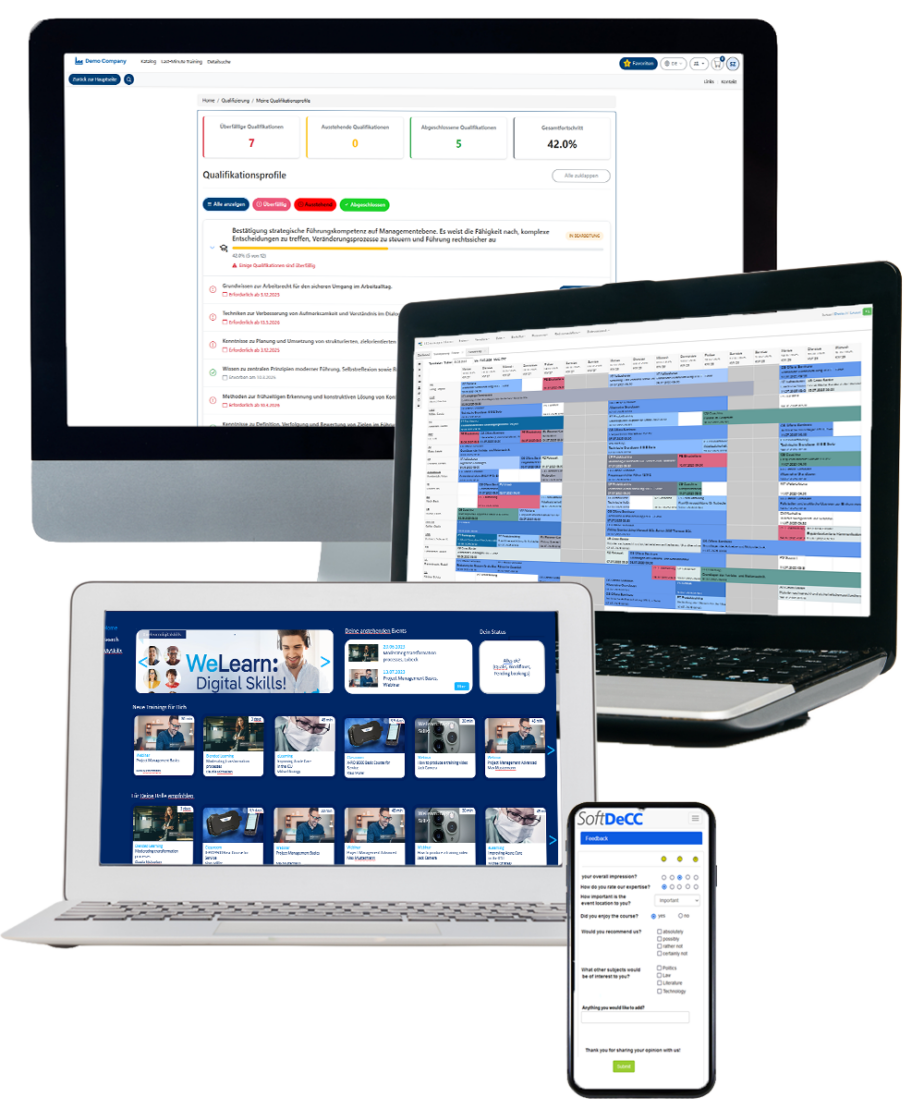
Digital learning environments are not static IT setups. They must evolve alongside the organization’s needs—technically, pedagogically, and culturally. Ignoring this risks shadow IT, declining motivation to learn, and data loss.Custom combinations of LMS, LXP, webinar software, and external learning platforms must be continuously adapted to the changing needs of all stakeholders. The key lies in systematic user requirement engineering and Lean UX—not in the next generation of software.
First published in the e-Learning Journal, Issue 7/2020—updated in 2026. By A. Bouzo, M.A.
Risks
Solutions
Opportunities
Challenges

1. Organizational Culture as a Pacing Force
The digital learning environment is a tangible reflection of a company’s culture. It demonstrates the true importance the company places on learning—not merely as a statement of intent, but through concrete infrastructure.
A learning culture encompasses the degree of freedom employees enjoy in their learning, the proportion of opportunities for discussion and reflection, and the ability to feed learning outcomes back into the organization. Companies that treat learners as active participants benefit from shorter decision-making processes, faster response times, and higher product and service quality.
2. Shadow IT: The Underestimated Risk
When the official learning infrastructure isn’t working, employees help themselves—using WhatsApp, Zoom, Google Docs, and similar tools. This entails significant risks: data loss, uncontrolled information flows, GDPR violations, and security vulnerabilities.Figures from German companies (Source: it-daily.net):
• 39% of German companies report data loss due to shadow IT
• 24% of employees consider their work IT equipment to be inadequate
• 77% of department heads report that their department’s workflow suffers when shadow IT tools are no longer allowed to be used
• Only 8% of German CIOs believe they truly understand shadow IT in their company
• Up to 52 instances of shadow IT per department were counted
The alternative: an IT department that operates in a service-oriented manner, actively involves stakeholders, and provides a professional digital learning environment that is actually used—consisting of structuring components (LMS, course management), a presentation layer (learning platform, LXP), target-group-specific learning portals, communication and collaboration tools, and up-to-date, access-controlled subject-matter content.

3. The LMS: The Backbone of Formal Learning
Product training, technical certification, occupational safety, compliance training—the LMS remains indispensable for these areas. It protects proprietary, competition-sensitive content, manages standardized curricula, and documents learning records in an audit-proof manner.
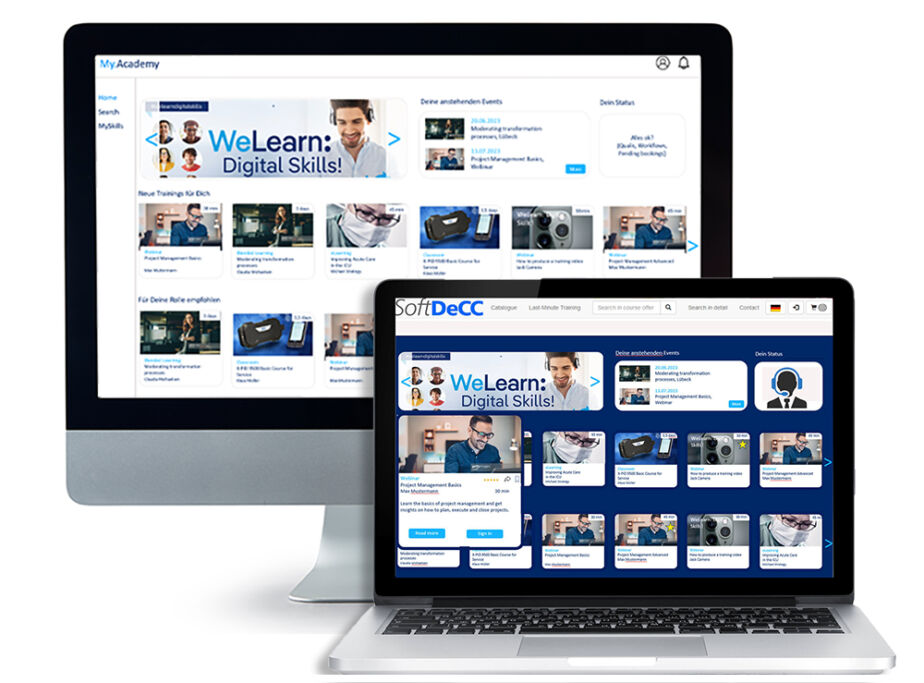
When it comes to safety-critical topics—such as the maintenance of medical devices, pharmaceutical processes, and regulated industries—a self-directed trial-and-error approach is not an option. A modern LMS like SoftDeCC is not a closed system: It makes content available both through its own learning platform and through a consolidated LXP.
4. External Learning Platforms: Opportunities and Risks
LinkedIn Learning, GoodHabitz, YouTube—external learning platforms offer a wealth of content and a wide variety of topics, especially for introductory and foundational courses. What is often overlooked, however, is that even well-produced content from external providers can be outdated or factually inaccurate. Integrating external platforms makes sense when they are strategically embedded within the overall learning landscape—not as a substitute for an independent learning infrastructure.

5. Stakeholder Requirements:
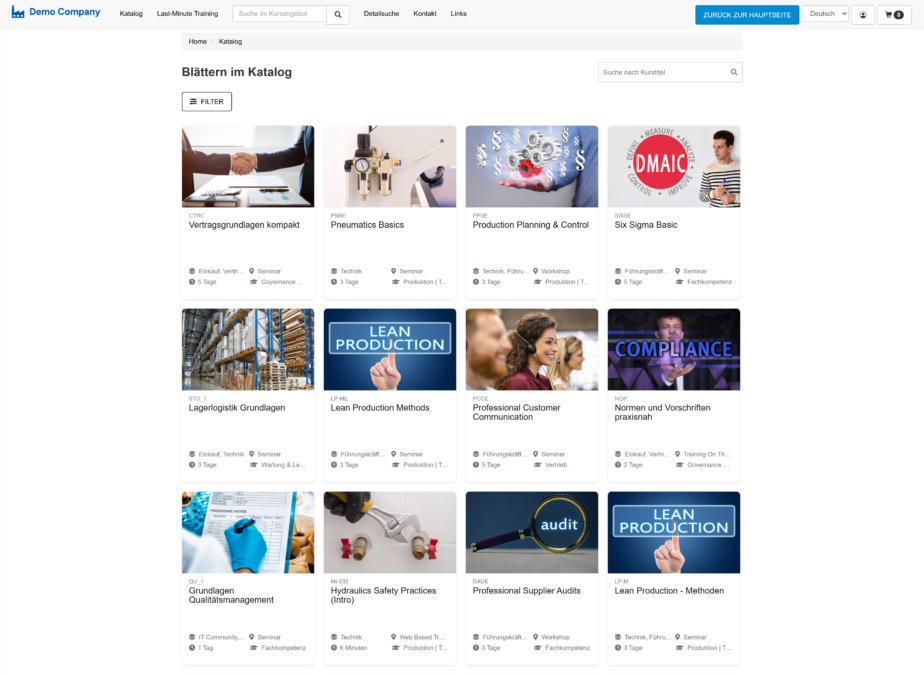
• Learners want to find, consume, and apply content. What matters most is not so much the design as the quality and relevance of the content.
• Training administrators spend most of their time on LMS functions: resource planning, participant management, billing, and reporting. For them, usability is what really matters.
• Executives and L&D decision-makers need transparency: What qualifications are in place? Where are the skill gaps? Which measures are effective?
Webinar software and collaboration tools add a synchronous dimension to the learning landscape: communication, networking, and self-directed formats such as WOL Circles or communities of practice.
Usability as a Key to Success
User Requirement Engineering & Lean UX
Usability is not a characteristic of a system—it is the result of the interaction between the user, the task, and the system in a specific context of use.
User Requirements Engineering
identifies, organizes, and prioritizes user requirements. In the ongoing development of an existing learning environment, the focus is on delta analyses: What has changed? Where are new gaps emerging?
Usability (ISO 9241): The extent to which a system can be used efficiently, effectively, and satisfactorily by defined users in a defined context. (Source: usability.de)
Lean UX
combines three approaches: Agile Development (small, precisely defined increments go through rapid testing cycles), Design Thinking (adopting the user’s perspective), and Lean Startup (treating development tasks as testable hypotheses). The result: more precise solutions, shorter development cycles, and less waste of resources due to incorrect assumptions.
Agile Mindset – Across Organizations
Departments that claim to embrace agile values often expect “perfection at the push of a button” from their LMS provider—that’s not agile thinking, but rather classic waterfall thinking dressed up in agile terminology. Digital learning environments are never finished; prioritizing partial solutions based on their added value is the true guiding principle of agile LMS development.
Successful Development Partnership
A strong learning infrastructure is built through ongoing dialogue—between requirements engineers and stakeholders, between the product owner and the development team, and between the LMS vendor and the client organization. The division of roles, acceptance criteria, and escalation procedures should be defined as early as the contract phase.
Summary
What a Future-Ready Learning Environment Needs
✓
Organizational Culture as the Foundation: The learning environment reflects the company's learning culture.
✓
LMS for structured, secure learning: indispensable for formal learning—but not the answer to every learning question.
✓
An integrated ecosystem rather than standalone solutions: LMS, LXP, virtual classrooms, and enterprise social networks complement one another.
✓
User Requirement Engineering Before System Selection: Professionally gather requirements from different user groups before making system decisions.
✓
Lean UX for Efficient Product Development: Iterative, User-Centered, Hypothesis-Driven.
✓
A long-term partnership with the LMS provider.
Related in-depth information on the structural building blocks:
Get More Information for Free Now
Should we start designing sustainable learning environments now?
In just 30 minutes, learn how to successfully and efficiently manage your corporate learning with SoftDeCC learning technology.
✓
Over 25 Years of Expertise
✓
Made in Germany
Frequently Asked Questions
FAQs on Digital Learning Environments
Bibliography
Arnold, R.; Erpenbeck, J. (2021). Knowledge Is Not Competence. Hohengehren: Schneider Verlag. Bak, P. M. (2019). Learning, Motivation, and Emotion. Berlin: Springer. Bloom, B. S. (1976). Taxonomy of Learning Objectives in the Cognitive Domain. Weinheim, Basel: Beltz. Damasio, A. R. (2004). Descartes' Error. Berlin: List. Hebein, E. (2016). Ensuring the Transfer of Learning in Workplace Continuing Education. Saarbrücken: Akademiker Verlag. Illeris, K. (2006). The “Learning Triangle.” In E. Nuissl, From Learning to Teaching. Bielefeld: Bertelsmann. Lemke, S. (1995). Transfer Management. Göttingen: Hogrefe. Mayer, R. E. (2021). Multimedia Learning. Cambridge University Press. McClelland, D. (1961). The Achieving Society. Princeton: Van Nostrand. Mittelmann, A. (2019). Knowledge management is going digital. Norderstedt: BoD. Pink, D. H. (2009). Drive. Edinburgh: Canongate Books. Schüßler, I.; Thurnes, C. (2005). Learning Cultures in Continuing Education. Bielefeld: Bertelsmann. Siebert, H. (2006). Motivation to Learn and Willingness to Learn. Bertelsmann.