


Made in Germany · ISO 27001 · GDPR-compliant
Digital Learning Paths in the Workplace
How to Structure Professional Development That People Actually Use
Learning paths in companies are structured learning sequences that guide employees in a targeted manner from one level of competence to the next. Unlike traditional course catalogs, they define the sequence, learning objectives, assessments, and success criteria—thereby laying the groundwork for demonstrably higher completion rates, comprehensive compliance documentation, and measurable competency development.
Many companies invest heavily in learning platforms and course libraries. Nevertheless, usage often falls short of expectations: Employees start training courses but don’t complete them—or can’t find their way around the learning offerings. The reason rarely lies in the content itself. Often, what’s missing is a clear learning architecture.
Motivation
Orientation
Structured Continuing Education


Definition
What are learning paths in companies?
A learning path is a structured sequence of learning content that guides employees step by step toward a defined competency goal—consisting of e-learning modules, videos, workshops, hands-on exercises, quizzes, and certifications. What matters most is not just the content, but the sequence and logic of the training program.
In larger companies in particular, learning paths help ensure that continuing education is implemented in a standardized yet role-based manner.
How It Works
How do learning paths work in the LMS?
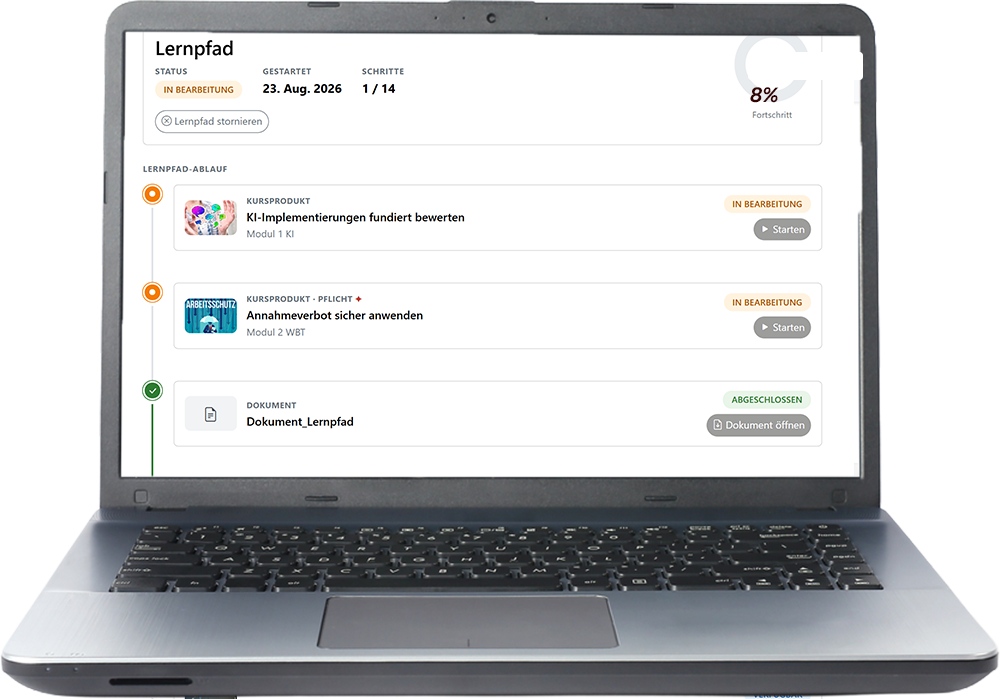
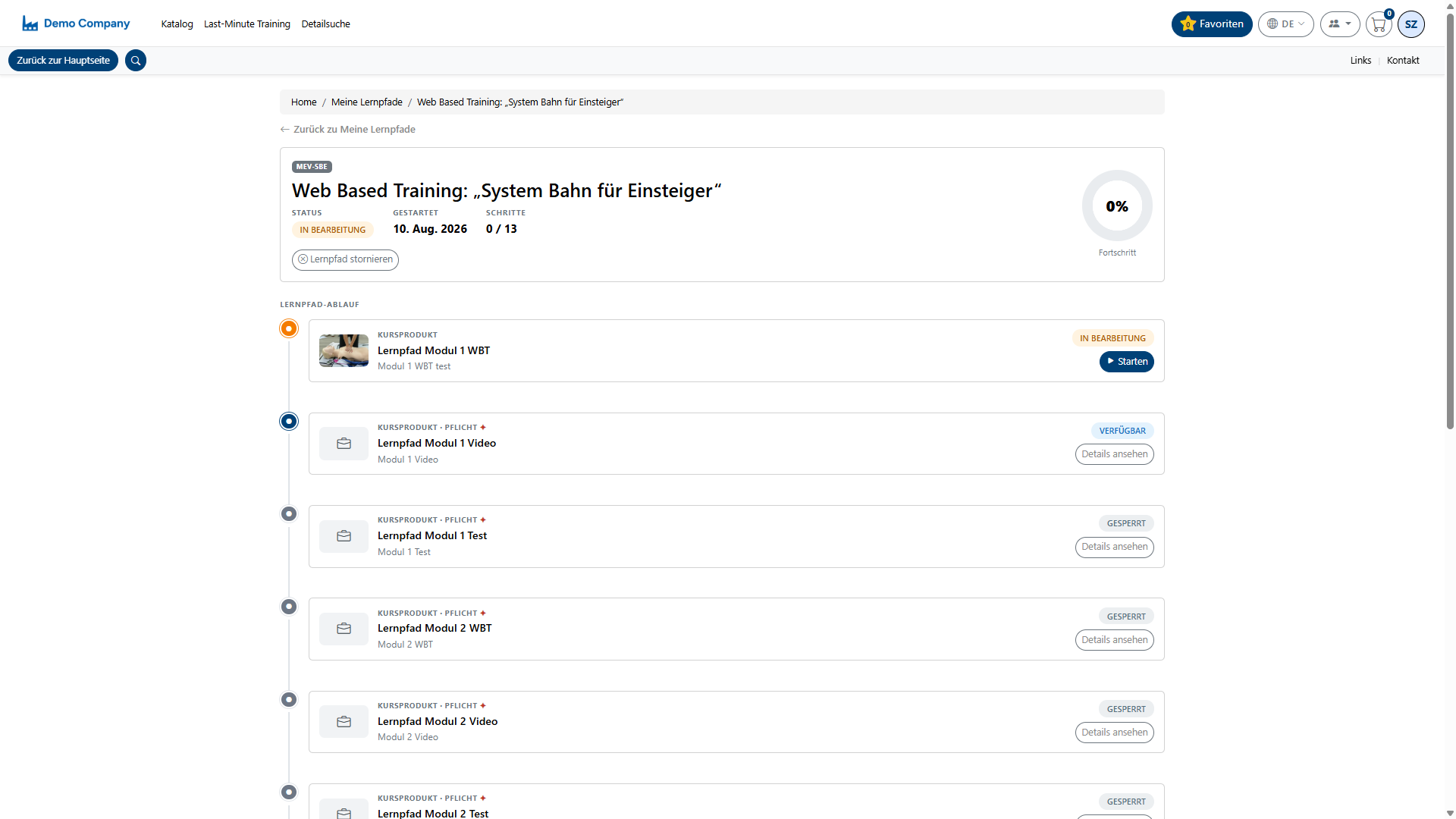
SoftDeCC handles the structuring, assignment, and tracking of learning processes. A learning path combines multiple courses, modules, or tests into a logical training program. Typical components include introductory modules, advanced courses, hands-on training, knowledge tests, and certificates of completion.
Sequential or Flexible
Automation and Personalization
Modern LMS systems automate many processes: automatic assignment of onboarding paths, reassignment upon expiration, escalations to managers, and automatic certificate generation.
Digital learning paths can also be tailored to role, location, or skill level—which is particularly relevant for upskilling and reskilling.

Artificial Intelligence and Automation
Automation and Personalization
Modern LMS systems automate many processes: automatic assignment of onboarding paths, reassignment upon expiration, escalations to managers, and automatic certificate generation.
Digital learning paths can also be tailored to role, location, or skill level—which is particularly relevant for upskilling and reskilling.
Added Value: Interfaces and Data Exchange
What kinds of learning paths are there?
Definition
Why Many Learning Paths Fail
• No clear connection to roles: General learning paths without a concrete practical connection seem arbitrary.
• Too much content at once: This leads to feeling overwhelmed rather than motivated—compact learning paths with clear milestones are more successful.
• Lack of performance measurement: Without tests, progress tracking, and reporting, it remains unclear whether the learning path is effective.
• No automation: Manually maintained learning paths scale poorly, especially for compliance or onboarding processes.

Step-by-Step
How Companies Build Successful Learning Paths
Intuitive · Automated · Scalable
What to Consider Regarding Sequencing Logic
What distinguishes a learning path from a simple course list in terms of software functionality is not reporting or automation—there are separate, more in-depth technical pages dedicated to those topics (see below). Four points are crucial to the logic of the learning path itself:
•
Branching logic: Can the next step depend on the result of the previous one—for example, a review module only if the test is not passed?
•
Prerequisite Check Between Modules: Is it technically possible to ensure that Module 2 is not accessible until Module 1 has been completed?
•
Progress Visualization for Learners: Can employees see at a glance where they are in the learning path and what they still need to complete?
•
Combining fixed and flexible sections: Can required modules be combined with elective specializations within a single track?

Tips and Tricks
Best Practices for Successful Learning Paths
• Start small and iterate: Begin with a few core learning paths (onboarding, compliance, a core development track), then scale up later.
• Think in terms of roles rather than topics: Focus on specific tasks and roles, not just general topics.
• Involve business units: HR alone rarely knows all the practical requirements.
• Update learning paths regularly: Schedule fixed review cycles.
Get More Information for Free Now
Ready to use digital learning paths?
In just 30 minutes, learn how SoftDeCC’s learning paths can help you transform your training environment into a goal-oriented corporate learning landscape through skills and qualifications management.
✓
Over 25 Years of Expertise
✓
Made in Germany
Frequently Asked Questions