


Made in Germany · ISO 27001 · GDPR-compliant
Tackling the Skilled Labor Shortage Through Skills Management
Tackling the Skilled Labor Shortage Through Training and Certification
The shortage of skilled workers is one of the most pressing challenges facing companies in Germany and Europe. Skills gaps, demographic change, and increasing complexity in leadership roles are creating pressure that external hiring alone cannot alleviate.
According to calculations by the Institute for Employment Research (IAB), companies in Germany have hundreds of thousands of hard-to-fill positions each year—particularly in technical, digital, and healthcare fields. Systematic skills management and upskilling are the most effective ways to address these bottlenecks internally.
Qualification
Skills Development
Upskilling



Identifying Skills Shortages
Signs of an Impending Shortage of Skilled Workers
Early detection is crucial for taking timely corrective action. Companies should continuously monitor four indicators:
• Turnover: High employee turnover in key positions may indicate a shortage of skilled workers.
• Recruitment difficulties: If it becomes increasingly difficult to find qualified candidates, this should serve as a warning sign.
• Aging workforce: If a large portion of the workforce is nearing retirement, long-term shortages could arise.
• Lack of qualifications: A need for new qualifications that are not currently available within the company may indicate a skills shortage.
Develop Skilled Workers
Training and Learning Paths as a Countermeasure
Workforce development is the most effective tool for addressing the shortage of skilled workers—provided it is strategically integrated. Upskilling and reskilling are not just HR buzzwords, but concrete solutions to real skills gaps.
Training Programs
✓
Strategic Focus: Training initiatives must be directly aligned with the company's goals and priorities (SMART criteria).
✓
Needs Assessment: Identifying knowledge gaps and bottlenecks—at the global, departmental, and team levels—ideally in collaboration with managers and employees.
✓
Cascading of Qualifications: Training courses build on one another and provide a clear structure for competency development.
Customize Learning Paths
✓
Skills and Strengths: Individual learning paths are based on employees' varying strengths and weaknesses.
✓
Career Goals: Learning paths take individual career goals into account—an aspiring leader needs different skills than a specialized professional.
✓
Regular Review: Learning paths are updated regularly to keep pace with changing business needs.
Train Our Own Skilled Workers
The Importance of Internal Recruiting
Internal recruiting is an effective strategy for addressing the shortage of skilled workers: It enables companies to tap into existing resources and skills without having to hire new employees. It strengthens employee retention and promotes the continuous development of the workforce’s skills.
✓
Talent Identification and Development The key is identifying potential within your own workforce—based on skills, experience, and ambitions. Skills management software helps you effectively identify this potential and create targeted development plans.
✓
Staffing and Internal Job Postings Internal job postings make employees aware of open positions and allow for broader use of the internal talent pool.
Use Case: Internal Recruiting
Skill and Qualification Management Software for Internal Recruiting
✓
Skill Matching: Access to comprehensive skill data enables a targeted search for candidates whose skills match open positions.
✓
Real-time analytics: Up-to-the-minute insights into the availability of qualified candidates, transferable to the talent pool via interfaces.
✓
Notifications and Recommendations: AI-based learning recommendations support strategic development and identify internal candidates for promotions.
✓
Filling Skill Gaps: Identifying specific gaps and offering appropriate training programs strengthens the internal talent pool.
✓
Individual Development Plans: Skills and qualifications are specifically tailored to meet the requirements of future positions.
✓
Integration with applicant tracking systems: Internal and external applications are managed efficiently and transparently.
Learning Experience Platform
Supporting Skills Development with the Learning Experience
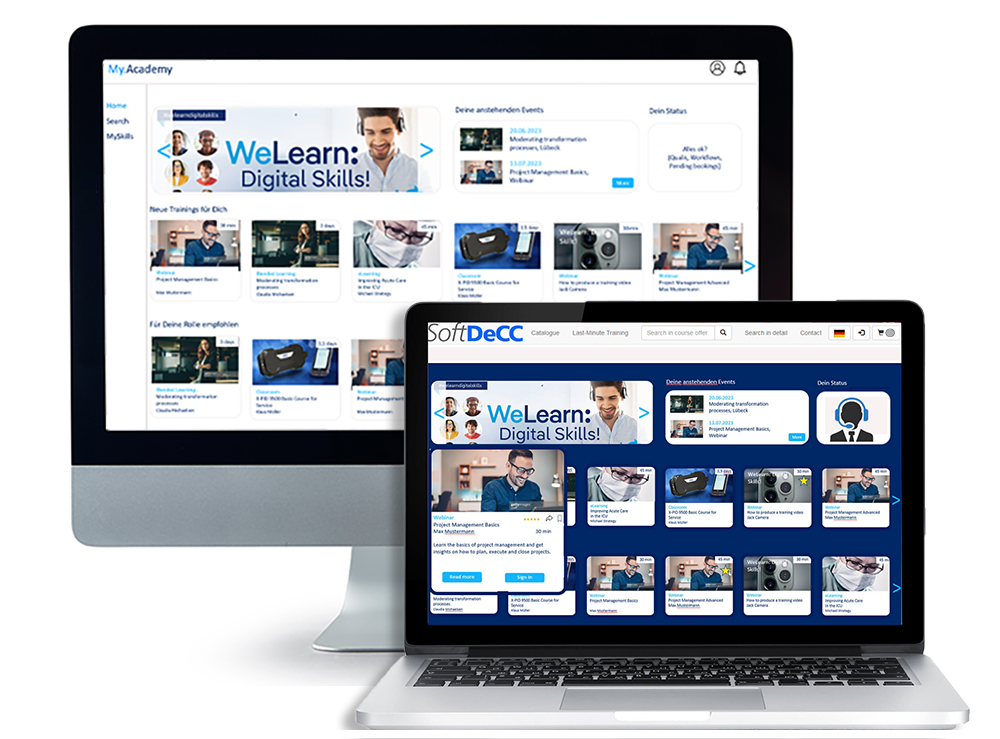
Learning experience features enhance skills management by recommending flexible, personalized learning content. Employees continuously build their skills—in a way that aligns with their individual learning styles and schedules. This helps track skills more effectively, identify gaps, and address them with targeted training programs.
Conclusion
Addressing the Skills Shortage Through Skills Management
The shortage of skilled workers is one of the biggest structural challenges facing companies. Effective countermeasures address three areas simultaneously: internal recruiting strategies, the role of skills management software, and how these two areas interact with the recruiting process. The strategic integration of workforce development, internal recruiting, and modern learning infrastructure is crucial to effectively addressing the skills shortage.
Get More Information for Free Now
Ready to develop your own skilled workforce?
In just 30 minutes, learn how SoftDeCC LMS and SQM can efficiently and cost-effectively support your internal training strategy.
✓
Over 25 Years of Expertise
✓
Made in Germany
Frequently Asked Questions